Quick Verdict
Neither format wins outright. Food trucks suit relaxed, outdoor, multi-hour events where guests move around and eat when they choose. Traditional catering suits seated, scheduled events where everyone eats the same course at the same moment. The right choice follows the shape of your event, not the other way around.
That is the honest version. What follows is the practical detail behind it, because the decision between a food truck and traditional catering gets made poorly far more often than it gets made well — usually by picking a visual format first and then forcing a venue and run sheet to fit it.
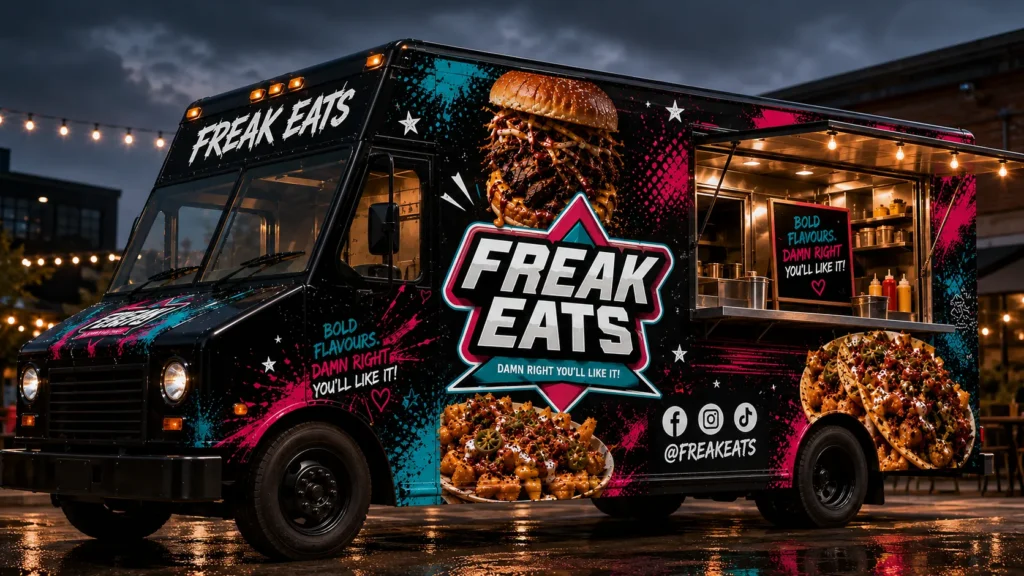
Freak Eats is an authentic Mexican-style mobile street food truck operated by Nathan Rogers, based at 3 Drury Pl, Hebersham NSW 2770 (Phone: 0477 417 629, Email: freakeats1@gmail.com). While we run a mobile commercial kitchen across Greater Sydney, this guide candidly sets out where traditional catering genuinely wins, where food trucks win, and how to assess your specific event.
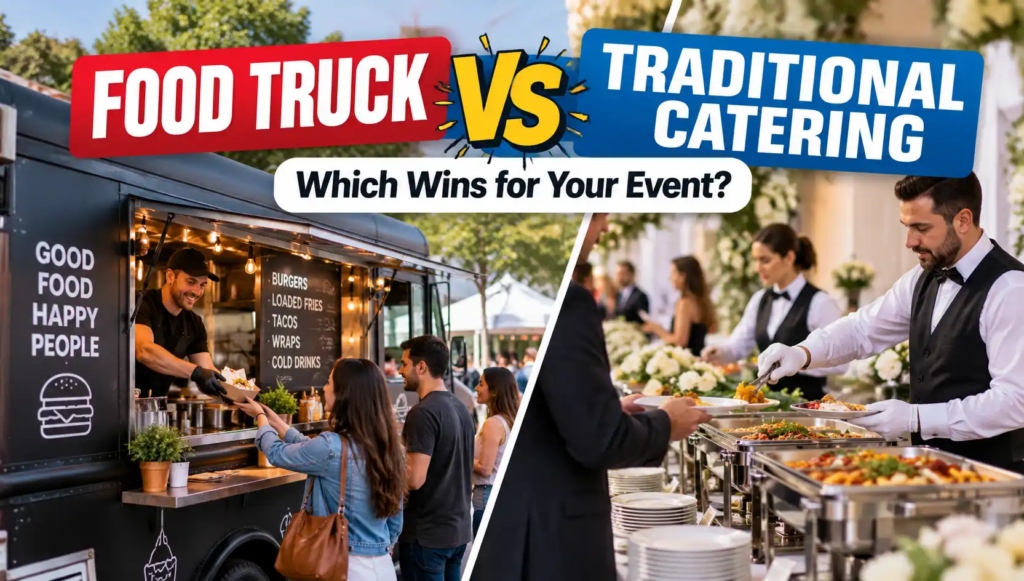
Side-by-Side Format Comparison
How the two catering formats compare across the eight operational factors on event day:
| Event Dimension | FOOD TRUCK CATERING | TRADITIONAL CATERING |
|---|---|---|
| Service Speed & Flow | Cooked to order in front of guests (45 to 90 seconds per ticket). Guests eat across a continuous service window, eliminating bottleneck queues. | All guests served within a synchronized 10 to 15 minute window for plated banquets. Buffet lines can form long queues if not split into duplicate stations. |
| Guest Atmosphere | Informal, social, and kinetic. Guests stay on their feet, mingle freely, and order when their appetite dictates. | Formal, seated, and structured. Best suited for ceremonial occasions where conversation is concentrated at designated assigned tables. |
| Site & Space Needs | Requires driveway or flat hardstand (approx 3m x 7m), 3.2m height clearance, turning space, and outdoor pedestrian access. | Requires dedicated on-site commercial or staging kitchen, plating tables, heating cabinets, refrigeration, and power points. |
| Logistical Footprint | 100% self-contained in a single vehicle. Zero venue kitchen mess. Arrives, services, packs down, and departs cleanly. | Significant footprint: table linens, chaffing dishes, crockery, cutlery crates, waitstaff staging areas, and dishwashing setup. |
| Dietary Handling | High agility. Gluten-free, vegetarian, vegan, and dairy swaps are made on the spot per individual ticket at the window. | Must be cataloged and locked in weeks beforehand. Last-minute dietary changes can stall an assembly-line plated service. |
| Cost Breakdown | Transparent per-head or minimum spend + travel. No hidden equipment hire, linen hire, or service staff hourly surcharges. | Tiered per-head cost plus mandatory front-of-house waitstaff, plate and glass hire, linen laundering fees, and cakeage/corkage. |
| Weather Resilience | Requires a dry, safe pedestrian path or overhead marquee cover between the truck window and dining area in heavy rain. | Protected inside indoor halls or banquet rooms. Completely isolated from unexpected downpours or high wind. |
| Bar & Alcohol | Focuses strictly on hot, fresh street food. Host provides own BYO beverages or hires a dedicated mobile pop-up bar. | Frequently packages full RSA-certified bar staffing, glassware hire, ice management, and beverage service directly into the quote. |
Where Traditional Catering Wins
- Rigid Run Sheets: When speeches, toasts, and awards must follow strict minute cues where all guests are seated.
- Formal Protocol: Black-tie galas and multi-course seated banquets expecting table-side wine pouring.
- Enclosed Spaces: Venues on upper floors or heritage buildings with zero vehicle driveway access.
- All-in-One Packages: Planners who want food, bar, linen, tables, and dishwashing on one invoice.
Where Food Trucks Win
- Social Atmosphere: Backyard weddings, brewery parties, and corporate team days where guests move freely.
- Maximum Freshness: Every taco, bowl, and batch of tots is cooked hot from the griddle seconds before eating.
- Self-Contained Simplicity: No access to private kitchens or venue sinks required. Zero domestic mess.
- Honest Pricing: No separate tableware rental invoices, plate wash fees, or per-server hourly rates.
The True Cost Comparison
Comparing a food truck invoice directly to a traditional catering quote requires looking beyond the base headline per-head rate. Traditional catering quotes often omit operational essentials that appear as separate invoices later.
With traditional sit-down catering, client invoices regularly incur separate line items for: service staff (award hourly rates), crockery and cutlery rental (\$3 to \$7 per setting), tablecloth laundering, commercial kitchen hire fees, and rubbish disposal surcharges.
A self-contained food truck operates with a flat booking structure: you agree on a guaranteed minimum spend or fixed menu head-count, plus a travel fee based on distance from base (Freak Eats operates from Hebersham). Food is served in sturdy compostable packaging with wooden cutlery, eliminating plate hire, dishwashing stations, and front-of-house staff overhead.
The Twelve Questions: Which Format Matches Your Event?
Do all guests need to eat at the exact same minute?
If yes, traditional plated catering is required. If guests can filter up across a 90 to 120-minute window, a food truck is ideal.
Does the venue have vehicle access and a level hardstand?
Food trucks require stable level ground (3m x 7m min) and 3.2m height clearance. Without driveway access, traditional catering is mandatory.
What is the dress code and event formality?
Black-tie awards suit seated service. Smart-casual, festival, rustic barn, and outdoor warehouse settings favor food truck street dining.
Is there an operational commercial kitchen on site?
If your property has only a domestic stove, traditional caterers must hire portable cooking gear. A food truck brings its own fully equipped kitchen.
How complex are your guests’ dietary requirements?
Food trucks build meals per ticket on the flat-top, handling gluten-free, dairy-free, and vegan swaps without stalling service.
Do you have a wet-weather contingency plan?
If rain hits, food truck guests need a covered walkway or marquee umbrella to order. Traditional indoor catering is unaffected by rain.
Do you want guests seated or mingling?
Plated catering anchors guests to assigned tables for up to two hours. Food trucks keep guests circulating, conversing, and moving.
What is your total budget for auxiliary rentals?
If you don’t want to pay for hired porcelain plates, metal knives, linen tablecloths, and return washing fees, food trucks remove that expense.
How will alcohol and bar service be handled?
Traditional caterers often provide bundled RSA staff and wine service. With a food truck, you run an economical BYO bar or hire a separate mobile drink van.
How tight is the venue bump-in and bump-out window?
Traditional catering requires hours of equipment loading and cleanup. A food truck bumps in 60 to 90 minutes before service and departs shortly after close.
What is your guest headcount?
Single food trucks handle 50 to 180 guests comfortably across a service window. For 250+ guests needing rapid service, book multiple food trucks.
Do council or venue permits permit mobile commercial vehicles?
Always verify with private property owners, church grounds, or local councils whether a food truck can park and trade on the designated spot.
When Traditional Catering Is the Better Choice
A food truck is not the right answer for every event, and we would rather tell you that up front. Traditional catering is usually the better fit when:
- You need a formal seated meal. Plated courses served to tables at the same moment are what traditional catering does best.
- The venue does not allow vehicles. Some rooftops, ballrooms and heritage sites have no access for a truck at all.
- You want several courses with matched timing. Entrée, main and dessert on a strict run sheet suits a kitchen team inside the venue.
- Guests cannot queue. For elderly guests or very formal events, table service removes the walk to the window.
In those situations, traditional catering is worth the extra cost for staff, equipment hire and service time. The structure is the product.
When a Food Truck Wins
For most relaxed events, a food truck is simpler and better value. It tends to win when:
- The mood is casual. Birthdays, staff lunches, engagement parties and wedding suppers suit food that guests collect and eat standing up.
- You want hot food made to order. Every meal comes straight from the window rather than sitting in a bain-marie.
- There is no kitchen on site. A self-contained truck brings its own cooking setup, so you do not need to hire one.
- Budget matters. One price usually covers cooking, serving and pack down, without the separate staffing and equipment lines that traditional catering often adds.
The Hybrid Option: Using Both
You do not always have to choose. Plenty of events mix the two. A common setup is traditional catering for a formal dinner, then a food truck for a late-night supper once the dancing starts. Another is canapés from a traditional catering team during drinks, followed by a truck for the main meal outdoors.
If you go hybrid, give each supplier a clear service window and make sure they know about each other early. Overlapping service times are the main thing that goes wrong.
Questions to Ask Before You Book Either
Whether you are comparing traditional catering quotes or food truck quotes, the same questions protect you:
- What exactly is included in the price, and what is charged separately?
- Is there a minimum spend, and what happens if guest numbers fall?
- How long is the service window, and what happens if the event runs late?
- Who supplies plates, cutlery, napkins and bins?
- What paperwork can you provide for the venue, such as insurance and food business registration?
- How do you handle dietary requirements, and what claims can you make?
Mobile vendors in NSW must meet specific food safety rules, which the NSW Food Authority sets out on its mobile food vendors page. Traditional catering businesses have their own obligations, so ask any supplier how they meet theirs.
Three Real-World Scenarios
Backyard 40th, 60 guests
Casual, outdoors, guests arriving over a couple of hours. A food truck suits this far better than traditional catering, with no kitchen or staff hire needed.
Corporate awards dinner, 150 guests
Formal, seated, speeches between courses. Traditional catering is the natural fit. A truck could still serve a late snack outside afterwards.
Wedding reception, 110 guests
Either works. Many couples use traditional catering for dinner and book a food truck for supper, which guests remember long after the night.
If your event sits somewhere in the middle, call us. We will tell you honestly whether a food truck or traditional catering suits it better, even if the answer is not us. You can also compare packages on our catering services and food truck hire pages, or read what it costs in our food truck hire cost guide.
Common Mistakes When Choosing a Caterer
Most catering problems are planning problems. These are the ones we see most often, whichever format people choose.
- Comparing the headline price only. A low per-head figure can grow quickly once staff, equipment, travel and service time are added. Always compare the full total.
- Booking before checking the venue. Some venues have exclusive caterers or no vehicle access. Confirm the rules before paying any deposit.
- Guessing guest numbers. Under-ordering leaves people hungry and over-ordering wastes money. Give your best confirmed count and ask how changes are handled.
- Leaving dietary needs to the day. Vegetarian or allergy-related requests are much easier to plan for in advance.
- Forgetting the weather. Outdoor events need a plan for rain and heat, whether that is a marquee near the truck or a covered area for guests to eat.
A Simple Planning Timeline
Whether you book a truck or a traditional catering company, the same timeline keeps things smooth.
- Three to six months out: confirm the venue and its catering rules, then request quotes. Popular weekend dates book early.
- Two to three months out: choose your caterer, pay the deposit and lock in the menu format.
- One month out: confirm the service window, site access, power and any equipment you need to supply.
- Two weeks out: send final guest numbers and dietary counts.
- The week of the event: share the run sheet and an on-the-day contact with your caterer.
Following this timeline means fewer surprises, a firmer budget and a caterer who arrives knowing exactly what you need. It applies to a single food truck, to traditional catering, and to any mix of the two.
Our honest take
For most relaxed events in Western Sydney, a food truck gives you better food for the money and a better atmosphere. For formal, seated occasions, traditional catering earns its place. The best choice is the one that matches the way your guests will actually eat on the day.
What Guests Remember
Ask people about a wedding or party a year later and they rarely remember the exact menu. They remember whether the food was hot, whether there was enough of it, and whether it felt like part of the fun.
That is where a truck has an edge at casual events. The window becomes a gathering point, people chat in the line, and the food arrives fresh in their hands. Traditional catering creates a different memory: a calm, elegant meal at the table. Both are good. The question is which one fits the night you are planning.
If you are still unsure, think about how you want guests to feel when they eat. Relaxed and social points to a truck. Formal and seated points to traditional catering.
What Freak Eats Brings to the Table
Operated by Nathan Rogers from Hebersham NSW, Freak Eats cooks authentic Mexican-style street food fresh to order with zero holding warmers:
Taco (Set of 3)$23
Double Cheese Burger Taco$22
Freak Bowl$21
Loaded Tater Tots$20
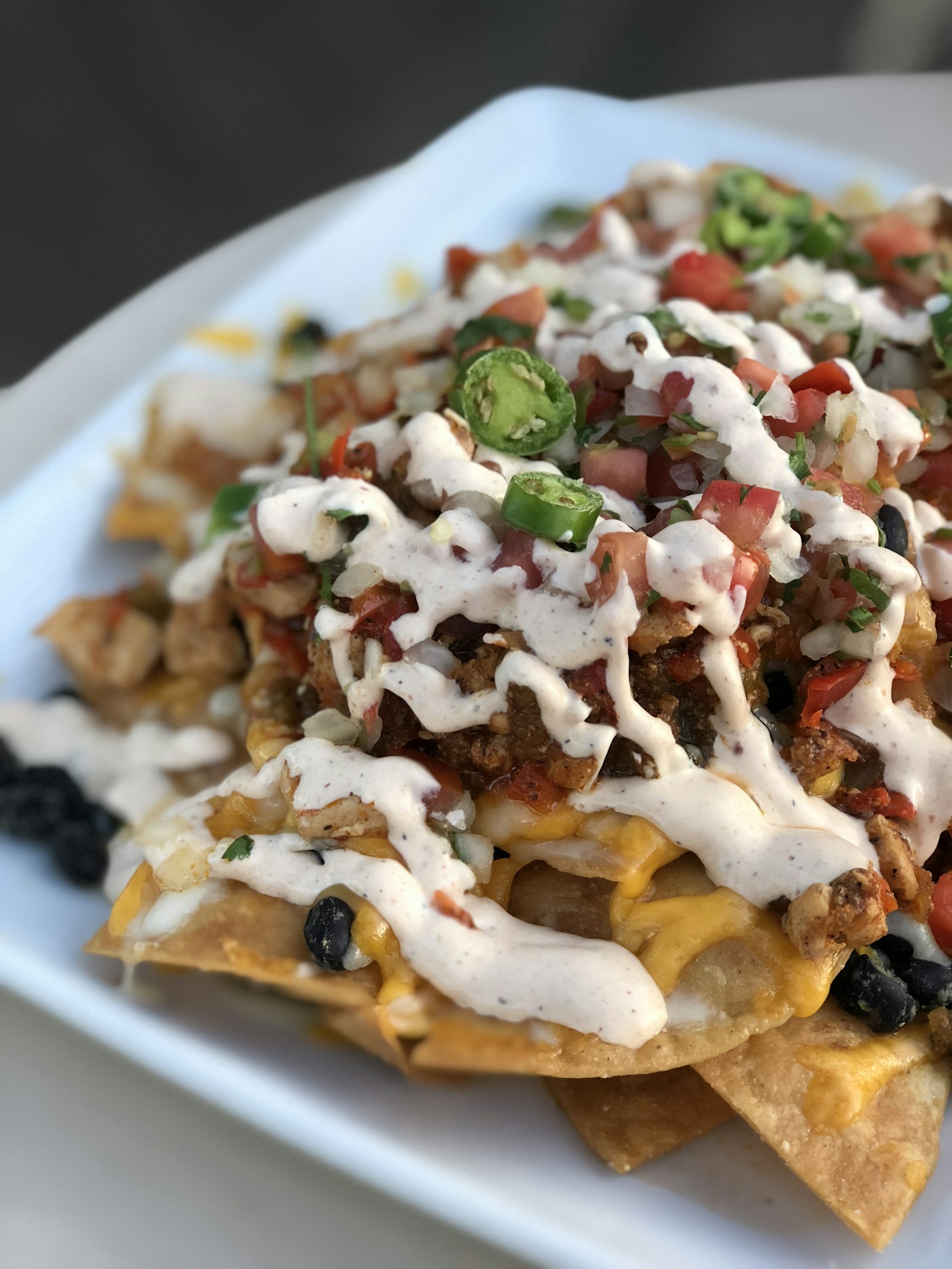
Nachos$19
Corn Ribs (Set of 6)$12
Small Tater Tots$8
Soft DrinksAt booking
Western Sydney & Regional Service Coverage
Operating from 3 Drury Pl, Hebersham NSW 2770, Freak Eats travels directly across:
- Hebersham
- Blacktown
- Penrith
- Parramatta
- Castle Hill
- Baulkham Hills
- Kellyville
- Rouse Hill
- Liverpool
- Campbelltown
- Bankstown
- Auburn
- Lidcombe
- Fairfield
- Cabramatta
- Canley Vale
- Wetherill Park
- Smithfield
- Merrylands
- Granville
- Mount Druitt
- Rooty Hill
- St Marys
- Glenmore Park
- Kingswood
- Marsden Park
- Schofields
- Riverstone
- Quakers Hill
- Stanhope Gardens
- The Ponds
- Bella Vista
- Norwest
- Seven Hills
- Prospect
- Eastern Creek
- Minchinbury
- Horsley Park
- Kemps Creek
- Badgerys Creek
- Richmond
- Windsor
Frequently Asked Questions
How long does it take to serve 100 guests from a food truck?
Because items are cooked fresh, service runs at 45 to 90 seconds per ticket. For 100 guests, a 90 to 120-minute service window provides a steady, relaxed flow without crowding.
Can a food truck cater an indoor event?
The truck remains parked outdoors on a driveway or hardstand, but guests step outside to order or organizers can opt for platter drop-offs indoors.
Does Freak Eats need on-site power or water?
No. Freak Eats is fully self-sufficient with onboard fresh water, gas, and power systems. If quiet 15A mains power is available, we can plug in as well.
What happens if it rains on event day?
We recommend a marquee pathway or positioning umbrellas near the service window so guests remain dry while picking up their order.
Can we do both traditional catering and a food truck?
Yes. Many weddings run traditional seated dinners followed by Freak Eats arriving later in the evening to serve fresh late-night loaded tots and tacos.
How far in advance should we book?
Popular weekend dates typically book out 2 to 6 months in advance. Contact Nathan Rogers early to secure your date.
Discuss Your Event Catering Options
Whether you need street food catering for 60 guests or advice on how a mobile kitchen fits your site layout, talk directly with Nathan Rogers.